CV Development

As part of my profesional Practice assignment requirement, I was able to update and my CV and integrate it into a more visually appealing design on illustrator. In the timeline section, I provided relevant information on my educational background.

I was also able to add icons inorder to showcase my skills and interests.

Cover Letter
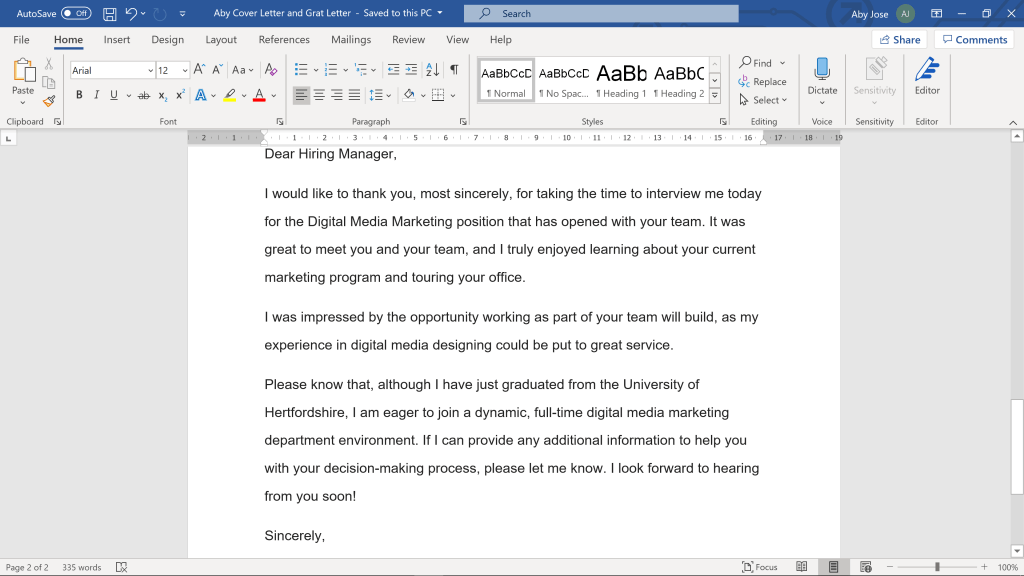
Grat Letter

I also worked on my Cover and Grat letter which will be sent along with my CV.

Bibliography:

CV template: https://www.behance.net/gallery/38529835/Free-Resume-Template-Ai?tracking_source=search_projects_recommended%7Cminimal%20icon%20download

CV Icons: https://icons8.com/

Showreel Development

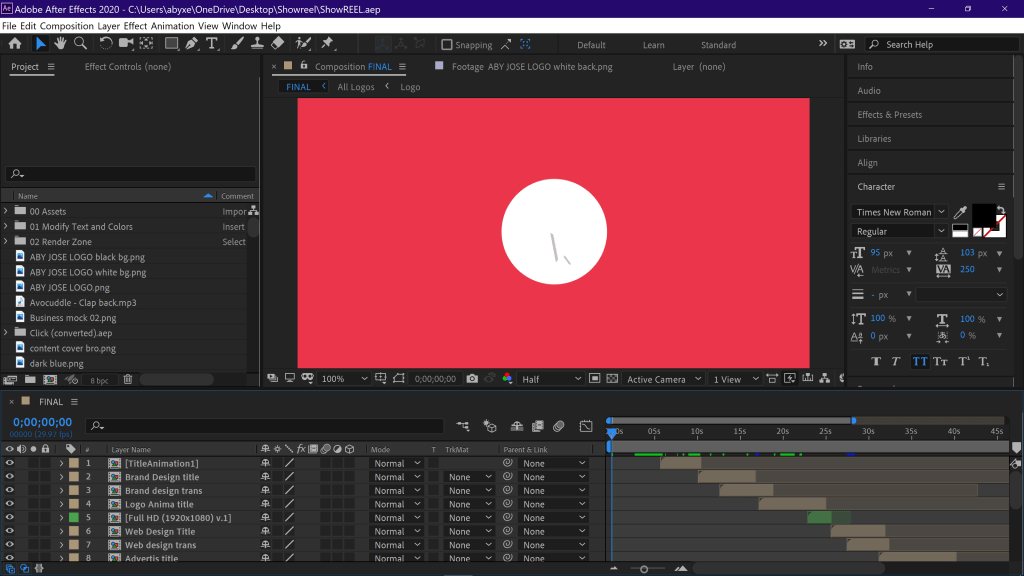
Creating a showreel on Adobe Aftereffects was one of the harder aspects of this project for me as I had to get more experienced with aftereffects.

My whole clip was around 1:14 seconds long. My idea of organising content was to list each skill I have along with a work I have produced.

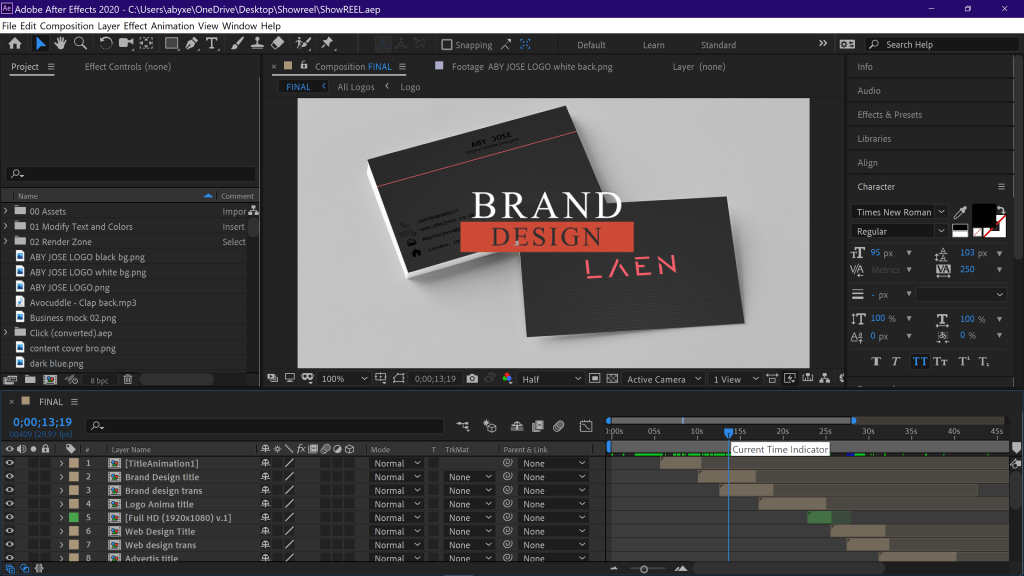
As shown here, I listed brand design as a tile and then added a transition of my business card design for the visual aspect. I repeated this process for each title and transition. In order to help me with the tiles, I used a template to integrate with my content.

Bibliography:

Tiles: https://motionarray.com/after-effects-templates/modern-titles-v6-free-32775

Transition: https://motionarray.com/after-effects-templates/free-dynamic-colorful-slideshow-80516

Transition: https://www.rocketstock.com/free-after-effects-templates/fast-slides-free-slideshow-template/

Click effect: https://www.rocketstock.com/free-after-effects-templates/free-logo-reveals-for-after-effects/

Portfolio Content Development


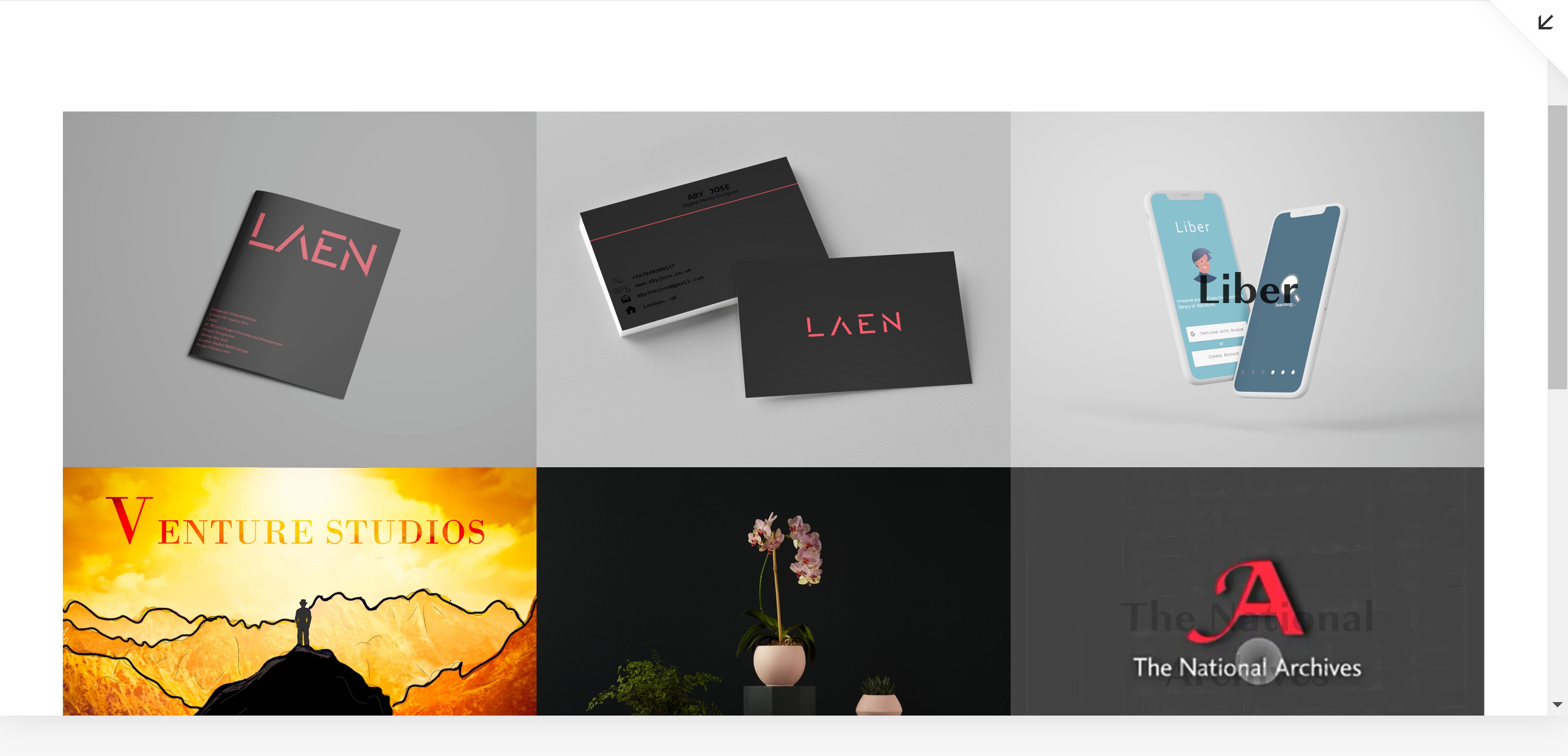
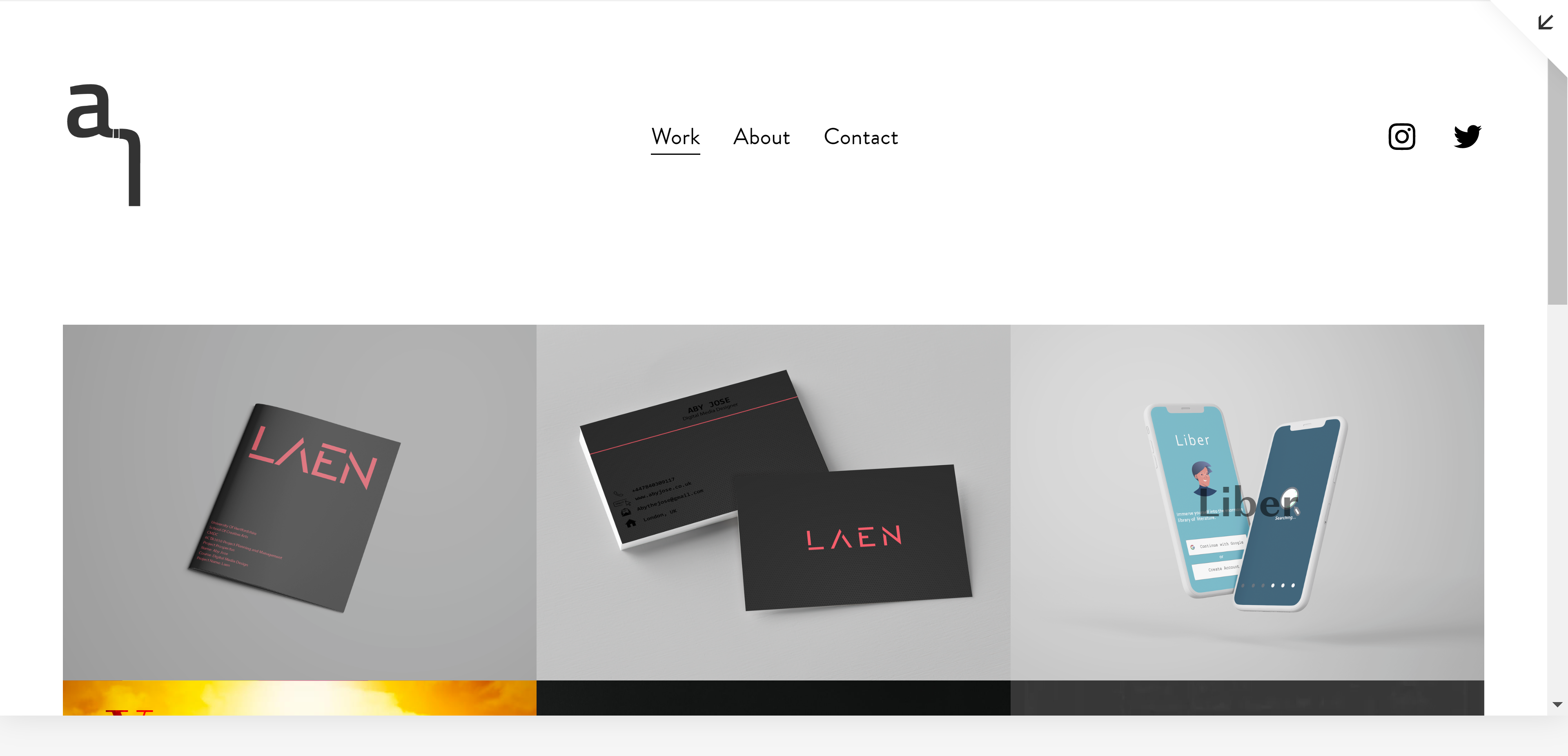
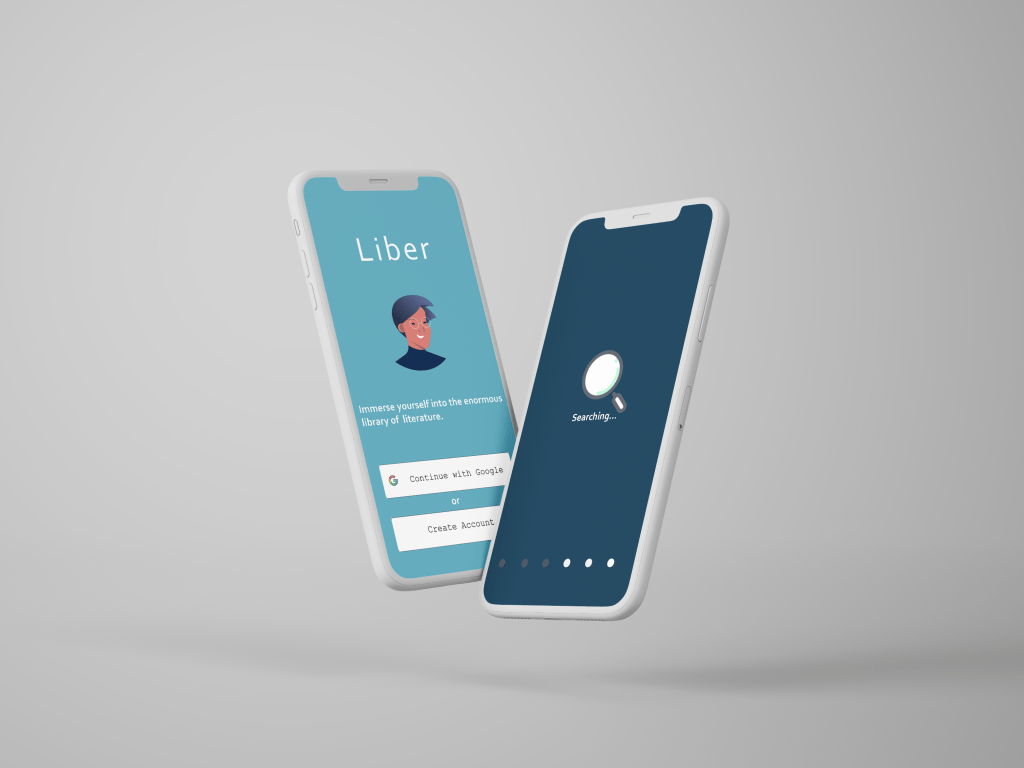
Liber was an application that I worked on in my second year. I used illustrator and photoshop to make a visual design which was then implemented into Axure for a simple prototype.

Venture studios was a group project from my second year, our group worked on a unity game which I have linked in my portolio site.

This Music VR app was created using illustrator and photoshop. I wanted to design my own musc app and I wanted to follow a minimalistic simple design. I created the icons on illustrator and integrated my final design onto a template in photoshop.

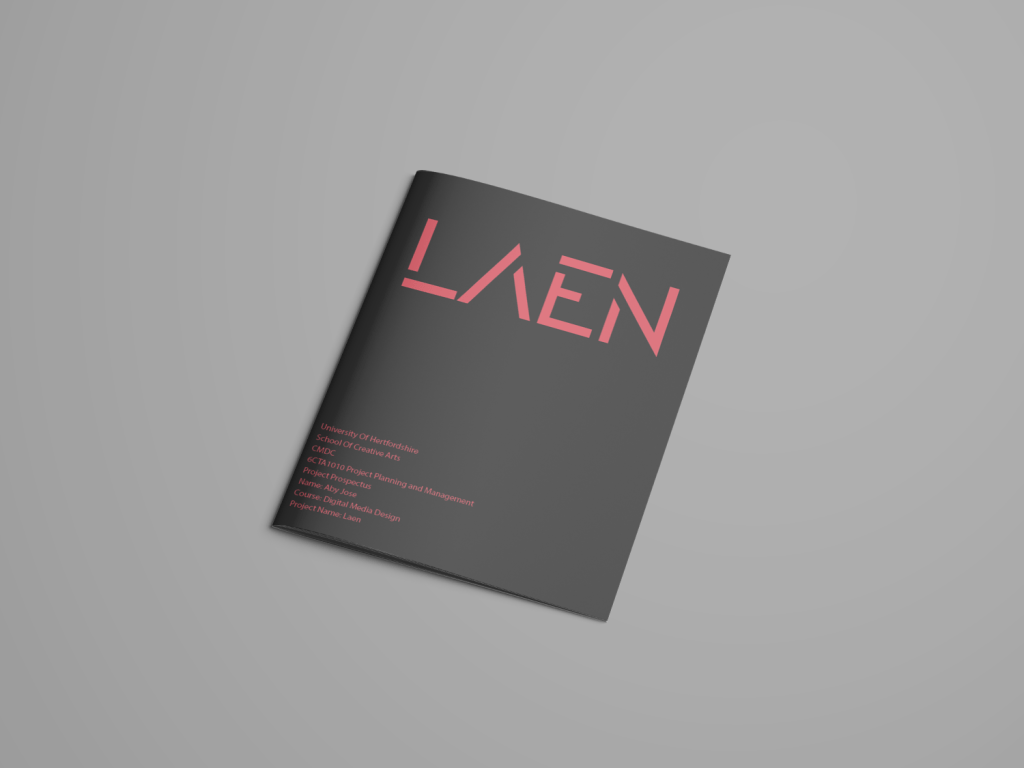
Laen Prospectus was made during my fina year as a part of my degree project. The front cover of the prospectus showcases my branding for Laen, with it’s logo. I created the logo on illustrator and then integrated the design into Adobe indesign for my prospectus.

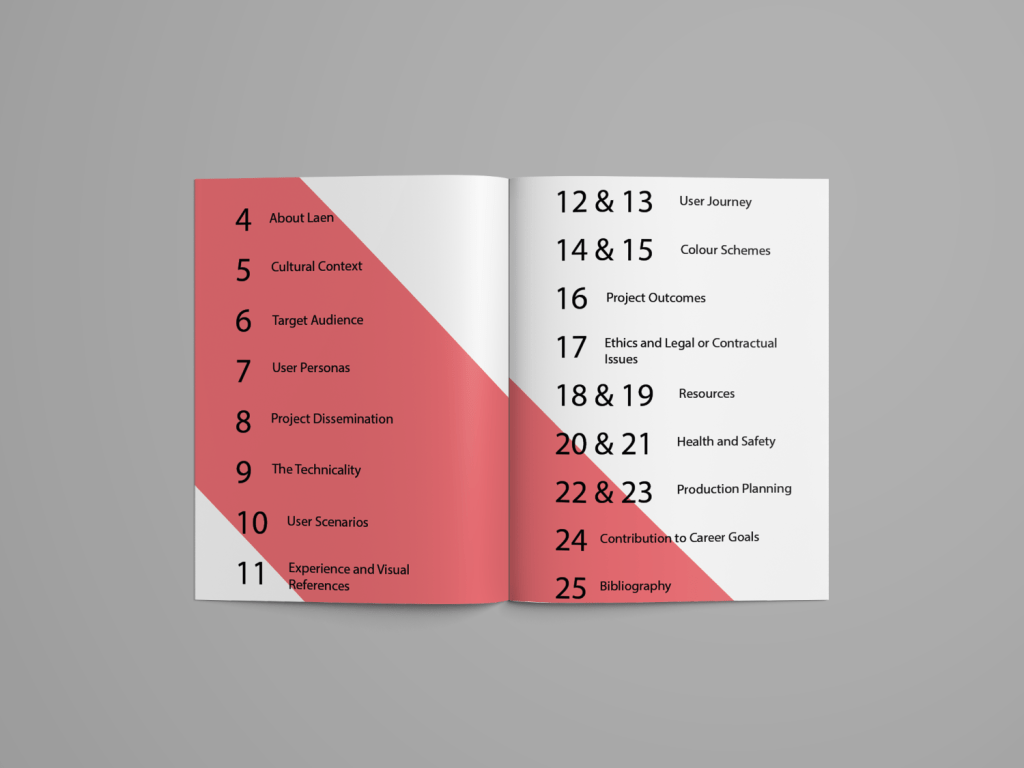
Contents page of my prospectus.

Bibliography:

Phone Template: https://www.behance.net/gallery/95735429/Free-Mockups-iPhone-SE-2020?tracking_source=search_projects_recommended%7Ciphone%20template

Site: Squarespace

Personal Logo Development

I wanted to use my initials of AJ to create a logo. I explored several designs that interested me on illustrator.

I liked the colourscheme of a dark background with red/pink character colour as it fit well with my brand. As a personal logo, I would still be interested in improving it more since I am not satisfied with the final design with my initials, but the colour scheme is a stable part of my branding.

My Laen logo would be my ideal logo to represent myself as it would identify with my “company” Laen.

Bibliography:

Fonts:

http://www.fontslots.com/zelda-font/

https://freefontsdownload.net/free-consolas-font-33098.htm

Business Card

Colour Scheme

Template: https://unblast.com/free-ultra-minimalist-business-card-mockups-psd/

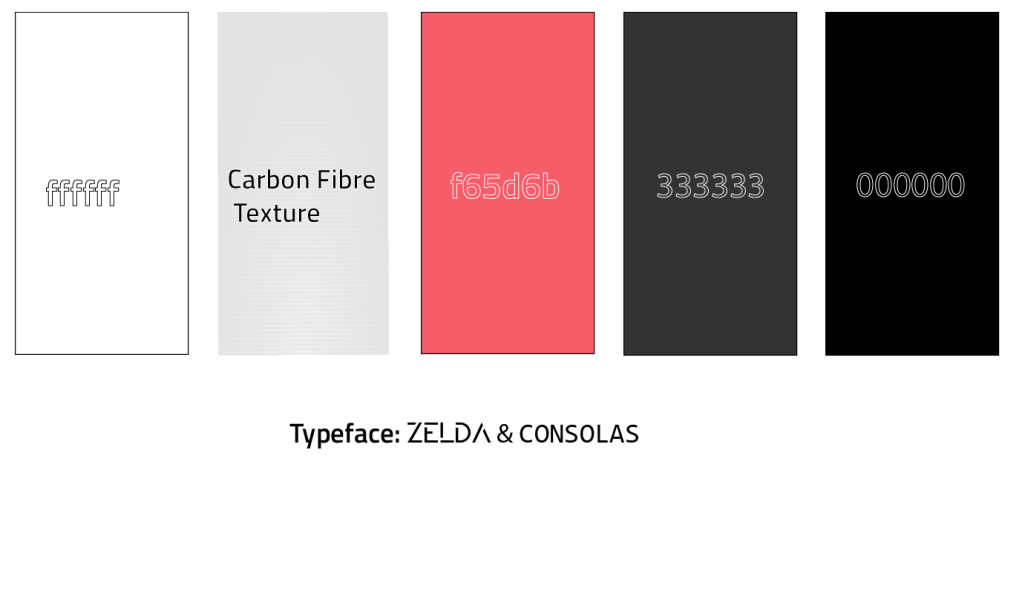
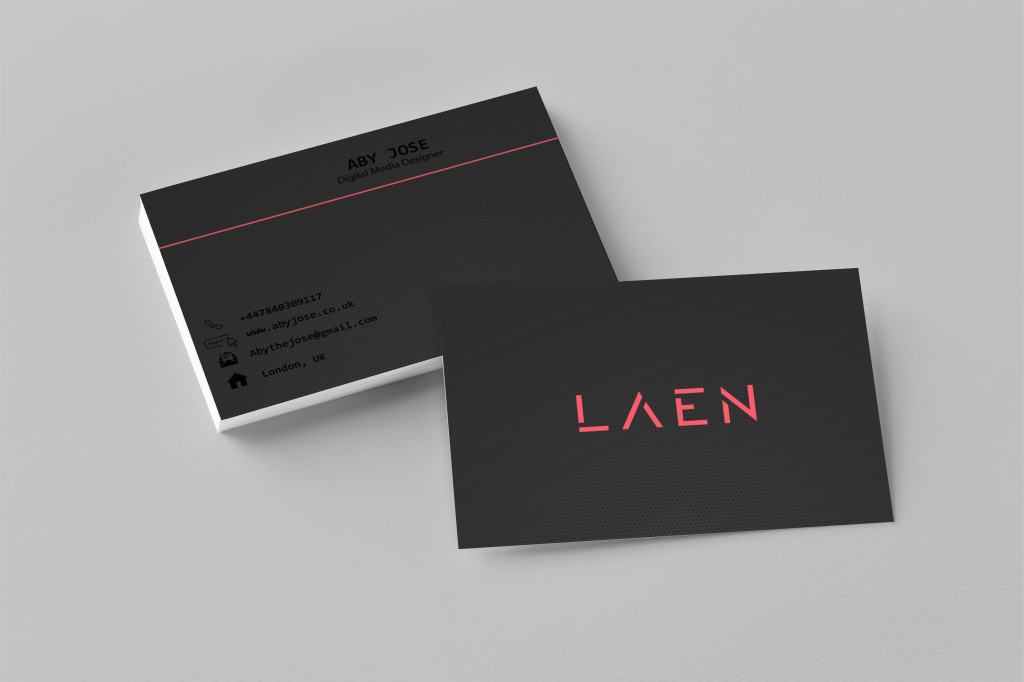
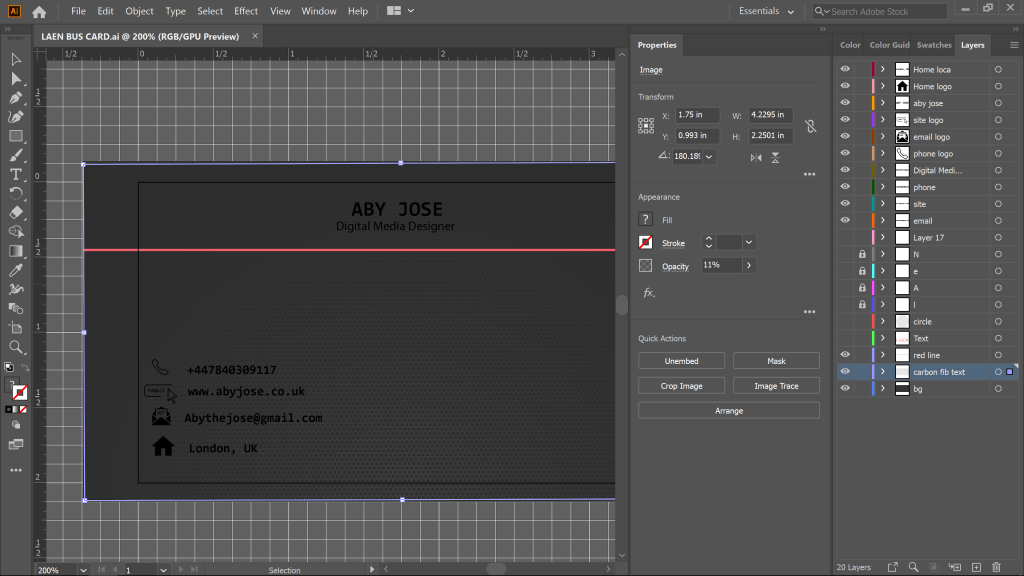
I wanted to make my business card have a minimalistic design with a carbon fibre texture. I used illustrator and photoshop in order to create my final design. I used shades of black, grey and red as my main focal point of the colour scheme. In order to create the Logo for Laen I used a font I found online called Zelda and on the backside I used Consolas as my desired font.

In order to add icons at the back I used https://icons8.com/ aswell as my own ones created on illustrator.

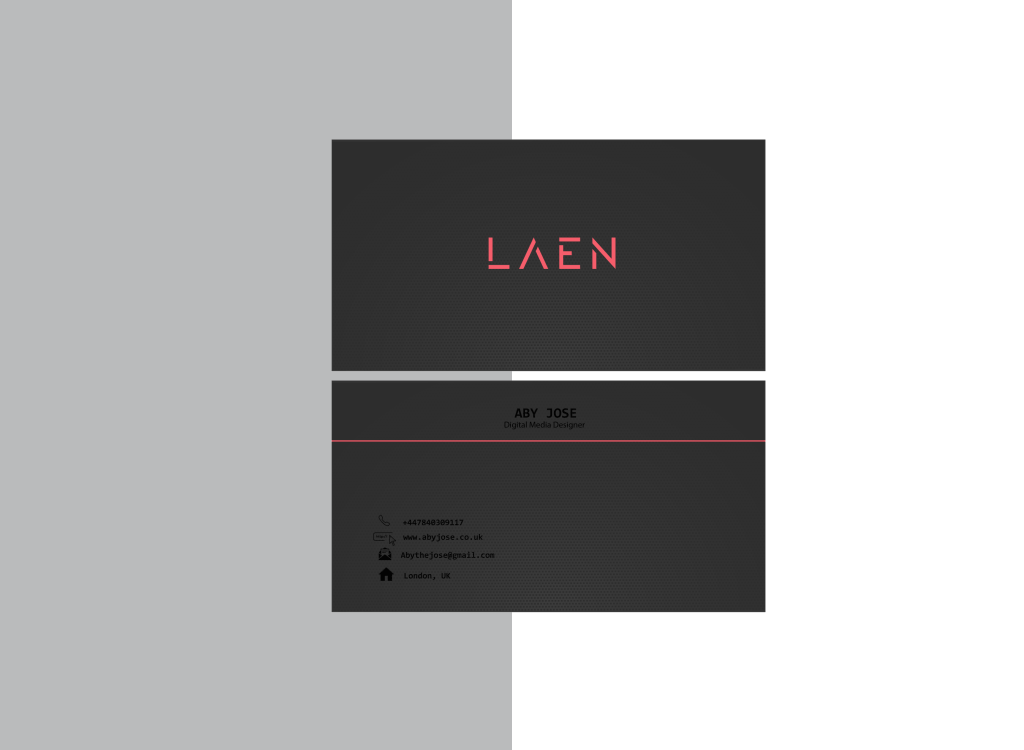
In terms of my main branding, I used Laen – the name of my final year project as I wanted it as the centre piece of my work and as the identity of my brand. On the back side of the business card I added my name and contact details.

Bibliography:

Font:

http://www.fontslots.com/zelda-font/

https://freefontsdownload.net/free-consolas-font-33098.htm

Icon:

https://icons8.com/

Card Template:

https://unblast.com/free-ultra-minimalist-business-card-mockups-psd/

Carbon Fibre text:

https://www.template.net/design-templates/textures/carbon-fibre-texture/

Smart Cities + Smart Living

The perception of smart cities was brought to us as a potential resolution to the challenges posed by urbanisation. It is also valid to note that the academic community has no common agreement on the exact definition of smart city. It is possible to find several publications and various business reports that converges on reviewing and proposing definitions on the concept of “smart”.
Smart city can be defined as the involvement of the use of information and communication technologies to enhance the quality of urban life with decreased cost and resource consumption [1]. According to a model originally developed by Giffinger et al. 2007, smart cities can be grouped into six categories or characteristics such as mobility, economy, governance, living, people and the environment. Residents are essentially the fundamental part of a city’s development as improving the quality of life for the residents will have a direct impact in developing a smart city [2]. The market for smart cities is estimated to reach over $2 trillion by 2025 with artificial intelligence forming as a significant foundation to the growth [3]. Furthermore, In accordance to the research done by business consulting and market research firm Frost & Sullivan, AI, distributed energy generation, personalised healthcare and robotics will be among the vital technologies to increase growth, efficiency, connectivity and urbanisation [4]. In the context of a globally mobile anomaly, an inherent element of a smart city is its discourse: how it shapes concepts and programs and is a principal means in which ideas and practices are borrowed, transmitted and replicated within different geographical, cultural and institutional settings [5]. From a contrasting outlook, it is significant that smart city discourse characterizes citizens as consumers rather than as political actors as when developing a smart city service, an absolute focus on the customer is needed. Citizens as consumers are necessary to express their opinion on the quality of services as a data or feedback providers [6].
The knowledge and innovation economy are primary operator for the smart city discourse. Growth in technological advancement of the recent decade would not have had a significant impact on the cities if they had not rooted their development in knowledge and innovation. The current development in influential sectors towards smart cities have created a prospect of smart cities in which cumulative intelligence, problem solving, innovation and the use of smart devices and networks offer progressive city functionality and an optimal performance. The landscape of smart cities are significantly sophisticated and open to creative thinking and new solutions. This is as a result of the character of digital direction that offers immense alternative solutions and spaces. [7]
Smart Cities are intricate sociotechnical systems and play an essential role in delivering an abundance of services to more than half of the world’s population.

Conventional urban governance was the most effective and ideal solution for a long time but due to the reliance on political leaders’ agendas, the ineptitude to adapt and recognise the emergent behaviour of the system, focusing on a smarter urban governance system with the help of technological innovations in ICTs can contribute to fixing and adequately addressing shortcomings. Technology can now assist more smartly by taking advantage of the data, computation power and crowd participation opportunities [8].

In conclusion, the initiation of technological innovations in the urban system under the umbrella term of smart city solutions provides new opportunities and contributes to improving the performance of cities. In order to reap the potential benefits of technological innovations, more developments are needed on the scope of urban governance systems. Conventional urban governance approaches will need to be replaced with smarter urban governance systems that make use of the development in the information and communication technologies while also addressing the changes in the socio-political culture of societies.

Group Work

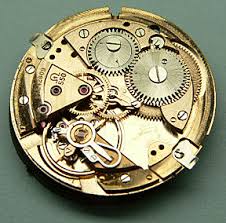
For my group work I decided to focus on creating a surveillance-proof wearable device that confuses tracking technologies. The device will be called Minutes. The concept will be a wearable watch with the hands inside which has the capability of jamming GPS and tracking. The watch will need to be charged but once it is being used it will interfere with the GPS and confuse the signals. It can also be turned off and in appearance it will just be a normal watch.

Image result for what is inside a watch"
Fig 1 (Inside of a watch)
Image result for what is inside a watch"
Fig 2 (Parts of a watch)

As a media designer to engage with smart cities means designing for citizens and using data to better match the needs of the user. By using real time data on how people use public spaces and infrastructure can help us develop spaces that meet user needs. As a digital designer I can use Data and modelling tools to save time and potentially money by testing designs before they enter the construction process.

References

[1] Ejaz, W. and Anpalagan, A. (2019). Internet of things for smart cities. [Miejsce nieznane]: Springer Nature Switzerland AG.

[2] Pinochet, L., Romani, G., de Souza, C. and Rodríguez-Abitia, G. (2019). Intention to live in a smart city based on its characteristics in the perception by the young public. Revista de Gestão, 26(1), pp.73-92.

[3] Smart Cities World. (n.d.). Smart cities market to be worth over $2 trillion by 2025. [online] Available at: https://www.smartcitiesworld.net/news/news/smart-cities-market-to-be-worth-over-2-trillion-by-2025-2785 [Accessed 1 Dec. 2019].

[4] Ww2.frost.com. (2020). [online] Available at: https://ww2.frost.com/wp-content/uploads/2019/01/SmartCities.pdf [Accessed 6 Dec. 2019].

[5] Joss, S., Sengers, F., Schraven, D., Caprotti, F. and Dayot, Y. (2019). The Smart City as Global Discourse: Storylines and Critical Junctures across 27 Cities. Journal of Urban Technology, 26(1), pp.3-34.

[6] Grossi, G. and Pianezzi, D. (2017). Smart cities: Utopia or neoliberal ideology?. Cities, 69, pp.79-85.

[7] Komninos, N. (2011). Intelligent cities: Variable geometries of spatial intelligence. Intelligent Buildings International, 3(3), pp.172-188.

[8] Razaghi, M. and Finger, M. (2018). Smart Governance for Smart Cities. Proceedings of the IEEE, 106(4), pp.680-689.

Images:

Anon, (2020). Parts Of A Watch | 101 Guide To Part Names Inside & Out. [online] Available at: https://bespokeunit.com/watches/watch-parts-guide/ [Accessed 9 Jan. 2020].

Artificial Intelligence and Algorithm Biases

Artificial Intelligence, In its infrastructure, is an algorithm; a sequence of information which can be pursued to deal with a precise problem. James Bridle advocates that at the roots of our mind about new technology remains an alarming problem. “We model our own minds on our understanding of computers, and believe they can solve all our problems if we supply them with enough data and make them fast enough to deliver real-time analysis.” According to Moore’s law, which calculates that computer processing power will double every two years, Bridle counteracts this point by bringing up the Gate’s law, which advocates that the benefits are neutralised by the inflation in the software of redundant coding.

Kate Crawford, a researcher at Microsoft during her talk about Social and Ethical Impacts of Artificial Intelligence talked about a situation when Julia Angwin, along with five other journalists exposed a flawed algorithmic system being used in courts. “Northpointe has used this software platform throughout courtrooms in the US. What it does is it gives a criminal defendant a number between one and ten, to indicate the risk of them being a violent offender in the future—so it’s basically like a recidivism risk. And what she found in this big investigation was that basically, black defendants were getting a false positive rate of twice that of white defendants.” (Kate Crawford, The Social and Ethical impacts of Artificial Intelligence, 2016 ) The insight that Crawford gave helps us to understand the weakness of giving control to an algorithm set by an individual to make unbiased decisions without the involvement of race in this scenario.

James Bridle also talks about algorithm bias from software in the US, made to assist with the sentencing requirements. “When someone was convicted in court, this computer programme would suggest how long they should go to jail for.” After an analysis of the software, it was established that it was giving people of colour, a longer, more vindictive punishment compared to people not of colour. The results of the analysis surprised a lot of people who believed that software or artificial intelligence was completely neutral or that technology is a levelling force that unites us, makes us all equal and allows us to make better-unprejudiced decisions about the world. Unfortunately, this was not the case, as all the software had to evaluate was what we were doing already; as we are building complex expert systems based on our own history which is profoundly prejudiced and discriminatory in many ways. Which concludes that according to Bridle, what we need in the field of AI and Algorithms are a massive democratisation of these technologies.
For artificial intelligence to not be prejudiced perhaps it needs to not reflect the world but a utopian model of a perfect world. Secondly, this requires the rejection of a flawed belief that artificial intelligence and it’s algorithms are objective. Narayanan (Princeton Prof, Al Ethics, Digital Privacy) had classified such flawed belief as an accuracy fetish, which is “the way big data has allowed everything to be broken down into numbers which seem trustworthy but conceal discrimination.
“The people in these rooms designing these systems look like each other, think like each other, and come from generally speaking very upwardly-mobile, very wealthy kind of sectors of society.” Crawford talks about how many of the people creating the set of instructions and artificial intelligence are coming from replicable backgrounds and are part of an overall similar society who design artificial intelligence to think like them which could lead to discrimination among people who cannot relate to them. So they’re mapping the world to match their interests and their way of seeing. And that might not sound like a big deal. But it is a huge deal when it comes to the fact that certain ways of life simply don’t exist in these systems. (Kate Crawford, Social Ethical Impact, 2016)

Group Work

This image has an empty alt attribute; its file name is SZB3iCBNzODv1-EDKXcGAMRJ9J6Gh3ZjGXdd0_ePcZBSgMpYCcpJcvkLACS354ew8nYpkJUnT03aXAZBlc1CPiQrIUOmL6GfMPvvHkpqIiw0VZDgRqRpH2Y0kUz2BBfyyxArrYYQ

As a group, we had to connect and create a scenario with tarot cards that were provided to us. The scenario that we constructed via the cards provided to us was of a researcher in San Diego, in 2021 doing research. Our goal was to get rich during the crisis of social immobility. Our chosen solution was to develop an AI to replace cheap labour as computers and programs will require less care and maintenance when compared to a human workforce who will need safety precautions and other legal requirements. In turn, this can also solve social immobility issues as the class of people the workers will belong to will be compelled to find alternative sources for employment. As a digital media designer, I need to think about how AI could affect me from an employment standpoint and if it could replace me in the future to do digital media designs with the right set of algorithms. I will have a unique point of view in designing which could be subjective and hard to replicate for a machine.

References

Bhatia, R. (2019). Biased AI: Princeton study indicates race and gender bias has crept into machine learning algorithms. [online] Analytics India Magazine. Available at: https://analyticsindiamag.com/biased-ai-princeton-study-indicates-race-gender-bias-crept-machine-learning-algorithms/ [Accessed 20 Nov. 2019].

Bridle, J. (2020). YouTube. [online] Youtube.com. Available at: https://www.youtube.com/watch?v=11TbXEKRXnA [Accessed 4 Dec. 2019].

Microsoft Research. (2018). Keeping an Eye on AI with Dr. Kate Crawford – Microsoft Research. [online] Available at: https://www.microsoft.com/en-us/research/blog/keeping-an-eye-on-ai-with-dr-kate-crawford/ [Accessed 4 Jan. 2020].

Self, W. (2018). New Dark Age by James Bridle review – technology and the end of the future. [online] the Guardian. Available at: https://www.theguardian.com/books/2018/jun/30/new-dark-age-by-james-bridle-review-technology-and-the-end-of-the-future [Accessed 12 Nov. 2019].

Virtual Reality in the Gaming Industry

Virtual reality in gaming is the process in which an individual can experience being in a three-dimensional environment and interact with that environment during their gaming experience. According to Paul Mealy (2018), Virtual Reality means an immersive computer-simulated reality that creates a physical environment that does not exist. According to Author and programmer Jaron Lanier in his book Dawn of the New Everything: Encounters with Reality and Virtual Reality; No matter how good a VR setup is, or will be in the future, we will always have an extensive understanding of the qualitative differences in reality and virtual reality. Strictly speaking, in Lanier’s future, The Matrix can never happen. He compares it to magic and asks you to imagine you are watching the world’s best magician perform the best-ever trick: even though you have requested to be fooled, at no point are you likely to think the trick is real magic because the following is a mutually agreed output. Thus the V in VR will always be the most important letter in the end. (Lanier, 2017)
From an economical standpoint “The Global Virtual Reality (VR) in Gaming market is anticipated to reach USD 48.2 billion by 2026. With the increase in spending capacity of people, people are demanding for new sources of entertainment and VR games offer a unique way of entertainment.” (Market Watch, 2019)
When it comes to video games, one may not be thinking about experiences that promote learning but many companies are fostering educational games with the use of VR. Educators have realised that interactive games can be a very effective way for students to absorb the materials in a classroom. Companies like zSpace are creating “Virtual instruction programs” powered by equipment and VR classroom apps to keep the students engaged and interested as well as a method to develop new types of teaching content for the teachers. (viar 360, 2018)
Young people with severe autism are being tested via a new technique with the use of VR to help development and learning. Prior’s Court in Berkshire are using virtual reality headsets and computer tablets to aid assist and develop the lives of the people who live there, and to accommodate treatment for each individual’s condition. The school has paid a total of £1.5m for the next four years and the teachers have been supporting VR as a vital resource for interactivity through gaming and exploration for the development of the pupil. (BBC Gadgil, 2019) The success of virtual reality in the gaming industry can be attributed to the intense immersion that it can provide as stated above but it is also because a significant aspect of the gaming culture is about remaking yourself and experiencing challenges and situations you would never have the opportunity to in real life. All of this is magnified through the use of VR tech where players truly feel the immersion of being inside the world they are navigating, instead of just a blunt visual stimulation from staring at the screen. Furthermore, there is another element to consider which is the increased interaction with your surroundings that VR gaming offers. Just as you would in real life, you will need to reach out and move your hands or your body for your avatar to respond. It eases the need for controllers or joysticks that were present in other modes of gaming interfaces. An example to consider is when Playstation adopted and introduced early vibration to its dual shock controllers to increase immersion which cannot be compared to its counterpart in Virtual Reality. (innovation & tech today, 2018)
As video games have grown and expanded in both their technology and audience, brands have recognised the increased potential and opportunities in this industry. An example to be considered is how google launched cardboard VR viewers, ranging from $5 to $20. The viewers are created to pair with your smartphones as a low-cost method to dive into Virtual Reality. With the use of 3D printing, it’s easy for brands to create their custom VR headsets to send home with the customer who gets to customise it in shape and colour while implanting brand logo onto the device. This provides the user with an easy to use VR gaming experience and brands get an effortless entry into the user’s home. (Headstuff, Wallace 2018)

Group Work

The question I selected for my group work was What kind of data could be extracted from the VR/AR applications we start using and how could these be used by future companies? Companies could store data on what we find interesting in a VR world and what we spend the most amount of time on and construct an idea on our lifestyle and interests. It can also be used to determine advertising by seeing what products we have been viewing in a VR world. An example could be a user scanning for AR on products you see around you and it could save your location or keep that data for advertising purposes which could assist the company in getting to know your financial capabilities better. Digital media designer will need practical skills such as software programming, 3D design skills, video/sound production skills, game development, UI/UX to help with VR development and to engage with the sector from a designer perspective.

Fig 1 VR privacy and security concerns are rising among users.

Fig 2

References

BBC News. (2019). Virtual reality improves autistic children’s lives. [online] Available at: https://www.bbc.co.uk/news/av/uk-england-berkshire-50839564/berkshire-school-uses-virtual-reality-to-help-autistic-children?intlink_from_url=https%3A%2F%2Fwww.bbc.co.uk%2Fnews%2Ftopics%2Fcywd23g0wzwt%2Fvirtual-reality&link_location=live-reporting-map [Accessed 3 Jan. 2020].

Mealy, P. (2018). Virtual & Augmented Reality (For Dummies). Hoboken, USA: Wiley.

Moersen, A. (2018). How Virtual Reality is Revolutionizing the Gaming Industry. [online] Innovation & Tech Today. Available at: https://innotechtoday.com/virtual-reality-revolutionizing-gaming-industry/ [Accessed 1 Jan. 2020].

PHD Media Worldwide. (2018). What does Jaron Lanier, godfather of virtual reality, think of VR? – Phil Rowley, PHD Global Business – PHD Media Worldwide. [online] Available at: https://www.phdmedia.com/what-does-jaron-lanier-godfather-of-virtual-reality-think-about-vr-phil-rowley-phd-global-business/ [Accessed 5 Jan. 2020].

Rizzo, A. (2018). [online] Ncbi.nlm.nih.gov. Available at: https://www.ncbi.nlm.nih.gov/pmc/articles/PMC6232426/pdf/fpsyg-09-02086.pdf [Accessed 4 Jan. 2020].

Viar360. (2018). The Future of Virtual Reality and Video Games & it’s Relation to Education. [online] Available at: https://www.viar360.com/future-virtual-reality-video-games/ [Accessed 12 Jan. 2020].

Images

MakeUseOf. (2020). 3 Major Security & Privacy Concerns Over Virtual Reality. [online] Available at: https://www.makeuseof.com/tag/3-major-security-privacy-concerns-virtual-reality/ [Accessed 13 Dec. 2019].

Ram, G. (2016). Augmented reality sparks privacy debate – Virtual Reality Augmented Reality Technology Latest News. [online] Virtual Reality Augmented Reality Technology Latest News. Available at: https://www.affinityvr.com/ar-privacy-debate/ [Accessed 13 Dec. 2019].

Collecting and making use of Climate Data

For thousands of years historians have measured and recorded information about the climate and as a media designer, it is important to know why. Collecting climate data has been a process followed by researchers and scientists around the world to help check for patterns and understand the impacts it has on the world. Weather and climate data has become more comprehensive after the 1960s as government and other organisations established and supported weather stations and satellites to measure regular observations. Assessment on earlier periods are scarce and tend to become more inadequate further back in time. Climate data from World War 1 and World War 2 are also known to be particularly desired due to the scarcity of personnel and resources for weather observation during the wars. Moreover, regular observation routines and distributions were interrupted and some climate data were destroyed. (Matthew S. Mayernik, Julie Huddle, Chung-Yi Hou & Jennifer Phillips, 2017)
Nowadays even the general public can gain access to climate data. In Toronto, archivists were rushed to preserve US government climate data before Donald Trump took office. Michelle Murphy who is with the University of Toronto’s Technoscience Research Unit pointed out that concerns around climate change did not end at the borders. “Things like climate change, things like water quality, things like atmospheric pollution don’t respect jurisdictional boundaries.” (BBC, 2016)
Researchers from six organisations have successfully developed an early cautionary system to aid in predicting potential water conflicts as violence associated with water grows globally. Water, Peace and Security (WPS) a global warning tool was presented to the UN security council before it was officially launched. The tool combines environmental variables such as rainfall and crop failures with political, economical and social factors to predict the risk of violent water-related conflicts up to a year in advance. Furthermore, it is the first tool of its kind to take into account environmental data, such as precipitation and drought, alongside socio-economic variables; these are known combination lacking in previous tools designed to anticipate water conflicts. The tool is available to the general public online although its primary aim is for raising awareness among policy-makers, people and parties in water stress regions. Currently, the tool has been capable of predicting conflicts to happen in 2020 in Nigeria, India, Iran, Iraq, Mali and Pakistan with a claim of 86% accuracy from the developer. (The Guardian, Saeed KD, 2020)
Climate data usually consists of one or a blend of the following products: point-based meteorological observations, gridded observations, satellite-derived estimates of climate, and simulations of climate derived from Global Climate Models or Earth System Models. (J. Suggitt, 2017) Our awareness of how the climate system functions inbuilt on a foundation of climate data. Although scientists and researchers have been the primary users of these data, an increasing number of resource managers who are working in fields such as health, public lands, water and marine resources are in need and are seeking access to climate data to help advise their decisions as policymakers are relying on climate data to develop climate change strategies. It would not be an exaggeration to claim that climate data provide the backbone for billion-dollar decisions. (Jonathan T. Overpeck, Gerald A. Meehl, Sandrine Bony, David R. Easterling, 2011) The efficiency of collecting climate data depends on skill and consciousness of the observer. Observers are responsible for maintaining the instruments, changing the charts on self – recording instruments, taking the readings every day and making weekly or monthly reports. (Linacre, 1992)
One of the major set back that occurs when it comes to climate data is data continuity. According to Texas A&M researcher Dessler “The data becomes much more valuable as the data sets get longer” As climate data are not replicable, if you were to lose measurements from the 1980s you will be unable to remeasure. The US has been ahead in gathering climate-related data but if it scales back due to policymakers and government interferences; the result would be a problem long term. “We measure sea level, gravity, and so on. If you don’t monitor these things, it’s like turning off headlights when you drive. For the first 20 feet or so it’s okay because you know what’s ahead, but at some point, you come to a curve.” (Physics Today, 2017)

Group Work

For my group work idea, I thought about an augmented reality helmet headset that helps the general public in waste management. Within the sector of waste and management it can provide the user with variety of applications such as data visualisation and communication to help the user integrate with their surrounding. We have a lot of waste in abundance and by using the AR integrated helmet, the user will be able to communicate remotely with real time access to information to perform critical parts of the job and communicate with members of the team who are near and far.

As a digital media designer, I will need to make use of my designing skills to raise awareness on climate change with the use of interactive posters and designs which can then be advertised on high traffic places such as train stations, the tube etc to engage with the audience. Creating VR and AR integrated applications can also be a vital part for a digital media designer to provide visual data on how the user can reduce and manage waste and live a more Eco-friendly lifestyle.

References

Dehghan, S. (2020). Water wars: early warning tool uses climate data to predict conflict hotspots. [online] the Guardian. Available at: https://www.theguardian.com/global-development/2020/jan/08/water-wars-early-warning-tool-uses-climate-data-to-predict-conflict-hotspots [Accessed 2 Jan. 2020].

Guide to climatological practices. (2011). Geneva, Switzerland: World Meteorological Organization.

Linacre, E. and Geerts, B. (1997). Climates and weather explained. London: Routledge.

Mayernik, M., Huddle, J., Hou, C. and Phillips, J. (2017). Modernizing Library Metadata for Historical Weather and Climate Data Collections. Journal of Library Metadata, 17(3-4), pp.219-239.

Overpeck, J., Meehl, G., Bony, S. and Easterling, D. (2011). Climate Data Challenges in the 21st Century. Science, 331(6018), pp.700-702.

Physicstoday-scitation-org.ezproxy.herts.ac.uk. (2017). Shibboleth Authentication Request. [online] Available at: https://physicstoday-scitation-org.ezproxy.herts.ac.uk/doi/10.1063/PT.3.3491 [Accessed 10 Jan. 2020].

Suggitt, A., Platts, P., Barata, I., Bennie, J., Burgess, M., Bystriakova, N., Duffield, S., Ewing, S., Gillingham, P., Harper, A., Hartley, A., Hemming, D., Maclean, I., Maltby, K., Marshall, H., Morecroft, M., Pearce-Higgins, J., Pearce-Kelly, P., Phillimore, A., Price, J., Pyke, A., Stewart, J., Warren, R. and Hill, J. (2017). Conducting robust ecological analyses with climate data. Oikos, 126(11), pp.1533-1541.

Ukdataservice.ac.uk. (2018). UK Data Service » Environment and energy data and resources. [online] Available at: https://www.ukdataservice.ac.uk/get-data/themes/environment-and-energy.aspx [Accessed 3 Jan. 2020].

Design a site like this with WordPress.com
Get started